
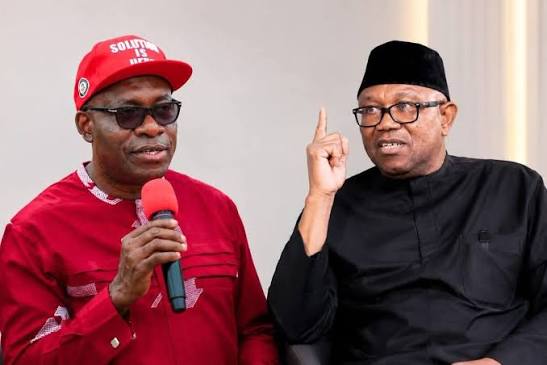
SOLUDO’S MAL-SCRUTINY OF OBI: A DEBILITATING DISTRACTION.
The latest war of words between Anambra State Governor, Prof. Chukwuma Soludo, and former governor Peter Obi over the state’s financial records is rapidly becoming a political spectacle that risks drowning out the issues that matter most to Ndi Anambra.
The controversy began after Anambra’s Finance Commissioner, Izuchukwu Okafor, said the Soludo administration was still servicing loans and other liabilities incurred by previous administrations, including Obi’s. Obi has strongly rejected the claim, insisting that he left office without unpaid salaries, pensions, gratuities or liabilities to contractors and challenging the state government to prove otherwise.
The Soludo administration has since released records which it says show that loans associated with Obi’s tenure remained outstanding. The government has also disputed Obi’s claim concerning an ecological fund and his assertion that more than ₦75 billion was left in savings. These are serious claims that should be settled by documentary evidence, independent verification and transparent financial records—not by an escalating exchange of political accusations.
But there is a larger question.
Why has Peter Obi become such a recurring subject of political combat from a sitting governor whose primary mandate is to govern Anambra?
Obi left the Anambra Government House years ago. Soludo is the incumbent. The people of Anambra are entitled to ask whether the state’s political conversation should remain trapped in an endless examination of a former administration, or whether the focus should be on the responsibilities of the government currently in office.
Accountability is not the problem. Selective, politically charged and seemingly endless scrutiny is where the problem begins.
If Soludo’s government possesses conclusive evidence that Obi left the state with outstanding debts, the solution is straightforward: publish the complete records, identify the loans, dates, beneficiaries, contractual obligations, repayment schedules and the precise responsibility attributable to each administration. Let independent auditors, the Debt Management Office and other competent institutions examine the records.
If Obi’s account is wrong, documentary evidence should settle it.
If the government’s interpretation is wrong, documentary evidence should equally expose that.
Anambra does not need a political shouting match. It needs the truth.
What is increasingly difficult to ignore, however, is the danger that this feud could become a debilitating distraction from governance. Every new accusation produces another rebuttal; every rebuttal generates another counter-claim. Meanwhile, political personalities dominate the conversation while the electorate watches.
Governor Soludo should be judged by the record his administration is creating today. Peter Obi should equally be judged by the record he created when he governed Anambra.
History does not need political propaganda to determine what happened. Documents will speak. Audits will speak. Official records will speak.
So, instead of turning yesterday’s government into today’s permanent political opponent, let the evidence be placed before Ndi Anambra.
No more political theatre. No more personality warfare. Bring out the books. Let the facts speak.
Anambra deserves governance, accountability and transparency—not an endless feud between yesterday’s governor and today’s governor.
EMkhWUDuLEzOLHJuSHaBPRu