
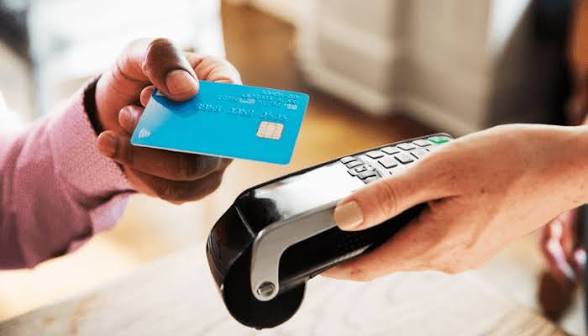
Nigeria’s cashless economy is changing the way small businesses operate, with transfers, POS terminals and other electronic payment methods becoming part of everyday transactions.
For Nigeria’s small businesses, the cashless economy is not just a government policy. It is now more about the customer standing in front of them saying, “I don’t have cash. Can I transfer?”
For many small business owners who cannot afford POS terminals or do not get quick bank credit alerts, this can mean losing sales.
Over time, several small business owners have complained that customers no longer pay with cash. While they badly want to adapt to the new trend, some struggle with poor networks and delayed bank alerts. And because they are trying to avoid being scammed, some would rather not release goods until they see the money in their account.
Others say they cannot afford to get a POS terminal because their businesses are not making enough money to cover the cost.
The Central Bank of Nigeria (CBN) started its cashless policy as a pilot in Lagos in January 2012, before extending it to other states and eventually nationwide. The aim was to reduce dependence on physical cash and encourage electronic payments.
But Nigerians got a much tougher introduction to cashless transactions during the 2023 naira redesign and cash shortage.
At the time, cash became so difficult to find that some people paid hundreds of naira simply to withdraw their own money. Customers paid as much as ₦5,000 to withdraw ₦10,000 through some POS agents. The CBN later moved against charges above its approved rates.
For small business owners, the experience exposed both the usefulness and the problems of a cashless system.
Today, many traders, food vendors, salon owners, online sellers and other small businesses routinely tell customers to transfer payment rather than pay with cash.
For the business owner, this can be convenient. There is less physical cash to keep around, and transactions leave a record. But it also means the business now depends heavily on banks, fintech platforms, internet connections and POS networks.
A failed transfer can mean a lost sale. A POS machine showing “pending” can leave both the customer and business owner waiting. And when the network goes down, a shop that normally accepts transfers may suddenly have no way to collect payment especially when the customers themselves do not move around with cash any more.
From January 2026, the CBN introduced a weekly cash withdrawal limit of ₦500,000 for individuals and ₦5 million for businesses, with fees applying to withdrawals above the limits.
So, the pressure has not disappeared.
People no longer want to queue at banks just to withdraw money that may not be enough for them. Instead, many now depend on their phones, bank apps and POS terminals to pay for almost everything.
That development, for small businesses, can be a blessing when everything works well, but when the network fails, the alert does not come, or a customer cannot transfer, it becomes a problem.