
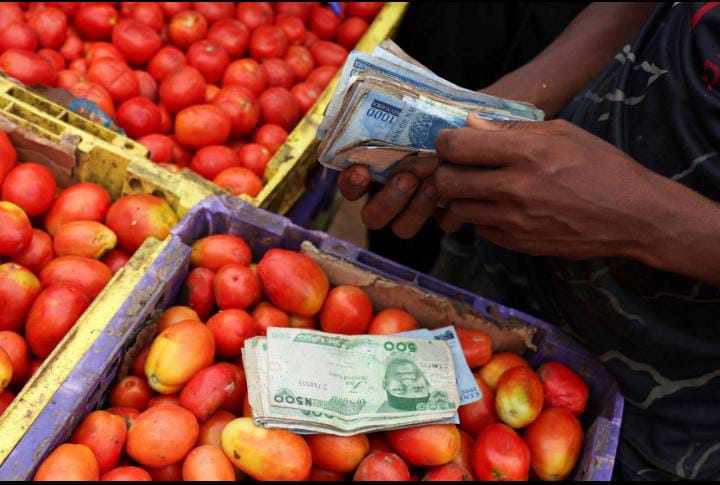
Nigeria’s headline inflation rate recorded a modest decline in July, but the latest figures offer little comfort to households as the cost of food continues to rise.
Data from the National Bureau of Statistics (NBS) showed that headline inflation dropped by 50 basis points to 15.43 per cent in July.
Food prices, however, moved in the opposite direction, with food inflation climbing from 17.52 per cent in June to 20.31 per cent in July. The figure represents its highest level in almost a year.
The renewed increase in food prices is likely to deepen the cost-of-living burden on low-income earners and households on fixed incomes, many of whom are already dealing with weaker purchasing power.
On a month-on-month basis, food inflation also accelerated, rising to 5.56 per cent in July from 3.75 per cent in June and 2.98 per cent in May.
Economists have linked the continued pressure on food prices to a number of structural problems, including insecurity, expensive logistics, inadequate transportation infrastructure and rising fuel costs.
The ongoing disruption linked to the conflict in the Middle East has also added pressure to supply chains and transportation costs, further affecting the movement and pricing of goods.
Meanwhile, core inflation, which excludes certain volatile items, declined to 14.97 per cent in July. It was the lowest level recorded since January 2025.
The moderation in core inflation could offer some relief to the Central Bank of Nigeria as it weighs its monetary policy options ahead of its September meeting.
The latest figures also show that inflationary pressure is not being felt equally across the country.
Adamawa recorded the highest headline inflation rate at 33.03 per cent, followed by Yobe at 25.2 per cent and Anambra at 24 per cent.
Nasarawa, Kebbi and Borno, on the other hand, recorded considerably lower inflation rates.
Analysts say the wide differences between states underline how differently households are experiencing the current cost-of-living crisis.
With the harvest season approaching, there are expectations that increased food supply could help ease prices in the coming months. However, economists say any lasting improvement will depend on addressing insecurity, reducing logistics costs, improving transportation and strengthening domestic agricultural production.
For many Nigerians, therefore, the fall in headline inflation may not yet translate into meaningful relief. At the market, where families buy the food they need every day, the pressure remains very real.